
Application-specific compressor solutions engineered for six core industry verticals across 52 countries. Select your industry to explore our relevant product lines and case data.
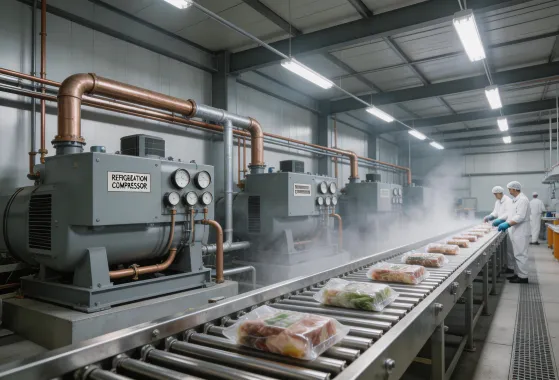
Low-temperature screw and reciprocating compressors for blast freezing tunnels, spiral freezers, cold storage warehouses, and beverage process cooling. Our oil-free platforms meet food-grade hygiene requirements for direct product contact applications.
| Parameter | Specification |
|---|---|
| Evaporating Temperature | -45°C to +5°C |
| Refrigerants | R-290, R-744, R-717, R-404A |
| Capacity Range | 25 to 600 kW |
| Compliance | HACCP compatible, FDA-grade oils |
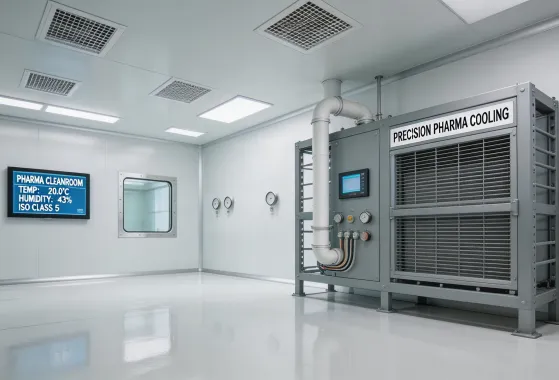
Oil-free scroll and screw compressor systems designed for GMP-compliant process cooling in vaccine cold chain, cleanroom HVAC, and bioreactor temperature control. Zero oil carryover verified by particulate testing at 0.3-micron resolution.
| Parameter | Specification |
|---|---|
| Oil Carryover | 0 ppm (Class 0 per ISO 8573-1) |
| Temperature Stability | ±0.5°C |
| Refrigerants | R-1234ze, R-134a, R-744 |
| Compliance | GMP, FDA 21 CFR Part 211 |
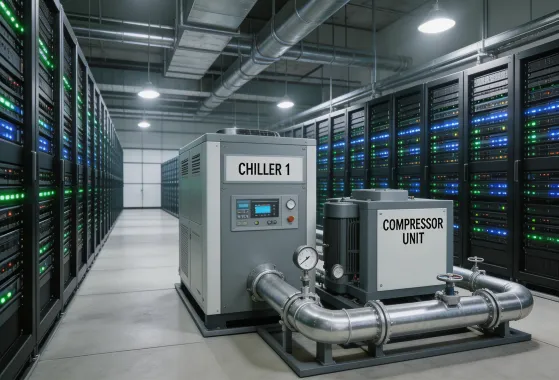
Variable-speed screw compressors optimized for IPLV performance in precision air conditioning, rear-door heat exchangers, and chilled water systems. Part-load efficiency is critical as data centers typically operate at 40-70% of peak load.
| Parameter | Specification |
|---|---|
| IPLV | 0.42 kW/TR (GD-VS Series) |
| Sound Level | ≤ 72 dB(A) at 1m |
| Capacity Modulation | 10-100% stepless (VFD) |
| Redundancy | N+1 configurations supported |
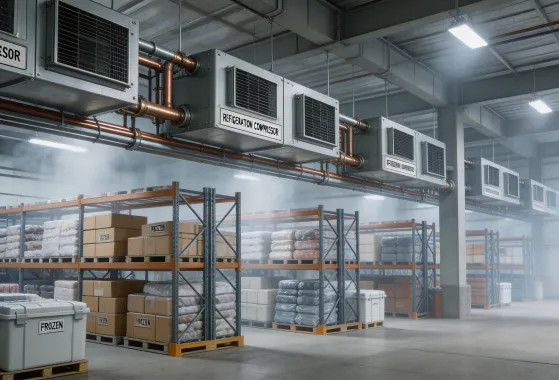
Reciprocating and screw compressors for distribution warehouse cooling, cross-dock temperature control, and transport refrigeration systems. CompressorView IoT integration provides real-time temperature and performance monitoring across the chain.
| Parameter | Specification |
|---|---|
| Temperature Range | -35°C to +10°C |
| Defrost Control | Intelligent adaptive defrost |
| IoT Integration | CompressorView with HACCP logging |
| Response Time | 24h emergency service |
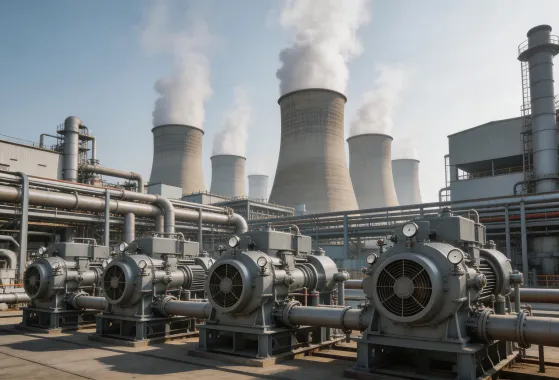
High-capacity screw compressor packages for chemical processing, plastics extrusion cooling, metalworking fluid temperature control, and petrochemical process heat removal. ATEX-compliant motor options for hazardous area installations.
| Parameter | Specification |
|---|---|
| Capacity | Up to 800 kW |
| Design Pressure | Up to 28 bar |
| Hazardous Areas | ATEX Zone 1 & 2 options |
| Compliance | PED 2014/68/EU, CE |
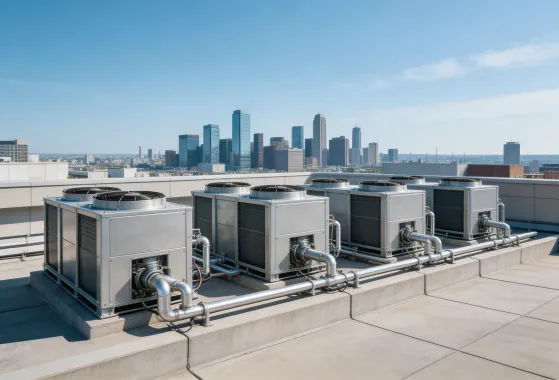
Scroll and screw compressors for rooftop units, packaged chillers, and split systems in commercial buildings. Optimized for comfort cooling with low noise levels and high seasonal efficiency.
| Parameter | Specification |
|---|---|
| SEER | Up to 18 (inverter models) |
| Sound Level | ≤ 65 dB(A) at 1m |
| Refrigerants | R-32, R-410A, R-1234ze |
| Compliance | ASHRAE 90.1, AHRI Certified |
Choosing the right compressor architecture depends on application-specific constraints. The following factors highlight common trade-offs our application engineers evaluate during project scoping.
| Selection Factor | Centralized Plant | Distributed Units |
|---|---|---|
| Efficiency at Scale | Higher overall COP due to optimized compressor staging and heat recovery integration | Lower efficiency per unit but avoids long pipe runs and associated pressure drop losses |
| Refrigerant Charge | Larger total charge concentrated in plant room — requires leak detection and containment per EN 378 | Smaller charge per unit, shorter pipe runs reduce leak probability and charge volume |
| Redundancy | Single point of failure risk mitigated by N+1 compressor staging | Inherent redundancy — one unit failure affects only its zone |
| Expansion | Requires plant room capacity planning upfront; expansion may need additional structural work | Modular addition of units as demand grows; lower upfront capital commitment |
| Maintenance Access | Centralized maintenance staff and tooling; easier to schedule preventive service | Multiple service points across the facility; may require more technician travel time |
Neither architecture is universally superior. Cold chain warehouses above 10,000 m² typically benefit from centralized plants with secondary glycol loops, while multi-zone food processing facilities under 5,000 m² often achieve better ROI with distributed condensing units. Contact our application engineers for a site-specific recommendation.
Our application engineers provide compressor selection reports tailored to your industry, load profile, and refrigerant requirements.
Request Application Consultation